Family + Pets
Introducing a new dog to children
Slow, supervised and boring is the goal. How to run first introductions in a busy household so both ends of the relationship start well.
Pawloma · 6 min read · 17 August 2026
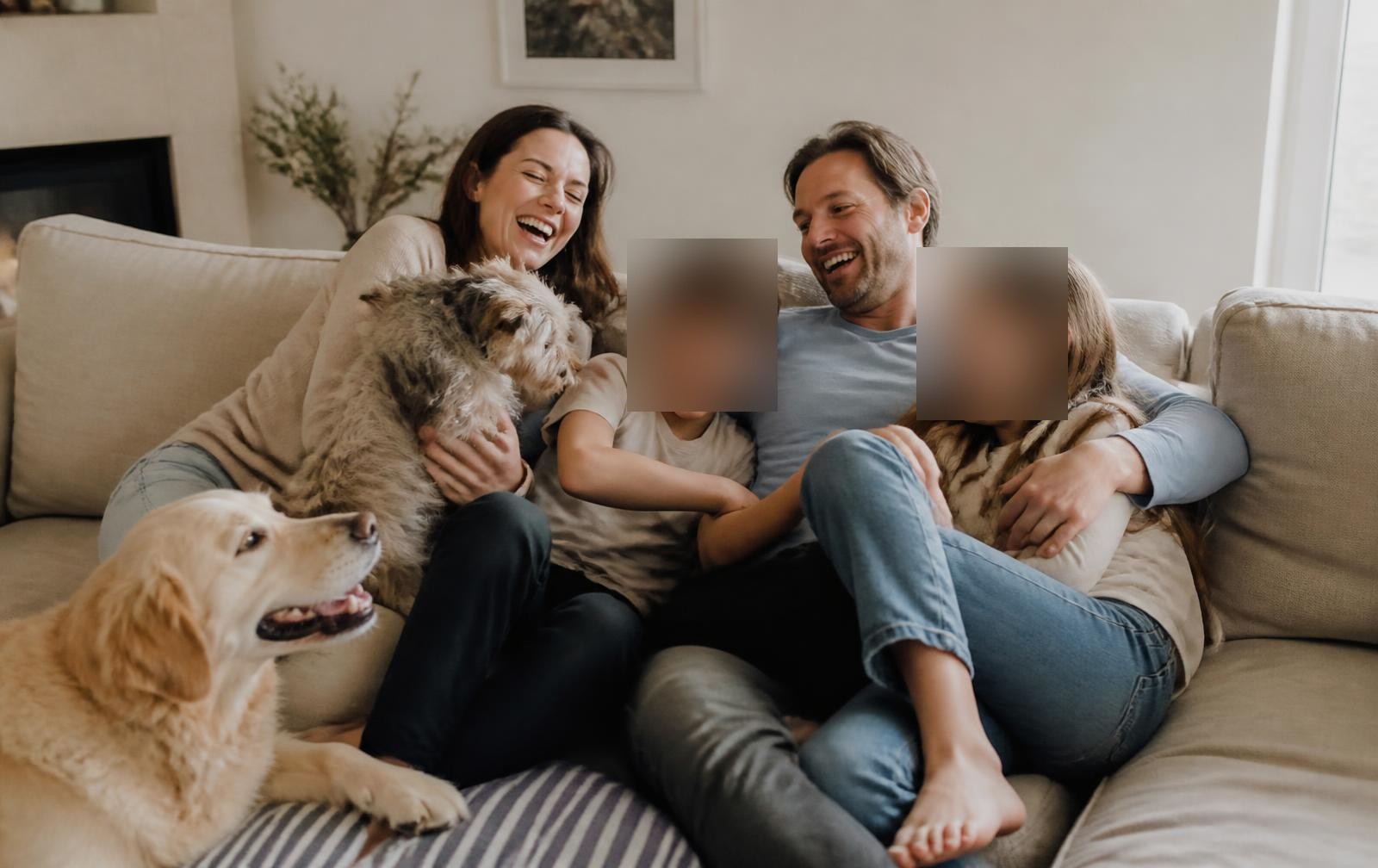
Kids and dogs is one of the great combinations. It's also the one where enthusiasm does the most damage. The first few days set the tone for years, and the goal for all of them is exactly the same: calm, predictable and slightly boring.
Brief the kids before the dog arrives
Set the rules while there's no exciting animal in the room to compete with. Keep them short enough to remember.
- Let the dog come to you. We don't chase, corner or pick up.
- Pat the chest or shoulder, not the top of the head, and not over the top of them.
- When the dog is eating, chewing or sleeping, we leave them completely alone.
- No hugging, no lying on, no riding, no faces close to faces.
- If the dog walks away, they're finished. That's allowed.
Give the dog an exit
Before day one, set up a child-free zone: a crate, a bed behind a gate, a quiet room. A dog that can always leave rarely needs to say no in louder ways. Make it a firm household rule that nobody follows the dog in there — not once, not for a photo.
The first meeting
- Meet outside or in a big open room, not a hallway.
- Kids sitting or standing still, quiet voices, no crowding at the door.
- Let the dog approach and sniff in their own time; if they don't, that's fine.
- Keep it to a couple of minutes, end it while it's still going well, then let the dog decompress.
Repeat short, easy sessions across a few days rather than one long emotional afternoon. Feeding the dog's treats by rolling them along the floor gives children a friendly role without hands near mouths.
Learn the quiet signals
Dogs almost always ask politely before they ask firmly. Teach the whole family to read the early signs and step in before the dog has to escalate.
- Turning the head away, licking lips, yawning when not tired
- Whale eye — the whites of the eyes showing as they look sideways
- Stiff, still body, tucked tail, ears pinned back
- Moving away, hiding, or freezing over food or a toy
Supervision that actually works
'Supervised' means an adult in the room, watching, phone down, close enough to intervene. Anything less is just proximity. Young children and dogs should be actively separated whenever that isn't possible — gates and crates are kinder than constant correction.
The relationship you want isn't a dog that puts up with kids. It's a dog that's genuinely pleased to see them.
Build it over weeks
Give children an age-appropriate job — filling the water bowl, helping measure food, joining a short walk, practising a trained cue with an adult. Shared, calm activity builds the bond far faster than cuddles do.
If anything worries you — stiffness, growling, guarding, snapping — stop and call a qualified force-free behaviourist early. These things are far easier to resolve at the whisper stage.